Artificial Intelligence
Who Authorized the AI?
AI authority rarely arrives through one reckless decision. It accumulates through reasonable approvals until no one can say who authorized the workflow.
Artificial Intelligence
AI authority rarely arrives through one reckless decision. It accumulates through reasonable approvals until no one can say who authorized the workflow.
AI
Something shifted at RSAC 2026 last week. The conversations that previously orbited around "how do we secure AI" moved toward something more specific and more urgent: how do we extend Zero Trust, the framework most enterprises have been building toward for the better part of a decade, to
AI
Key Takeaways * Combining data privacy protection with AI system safeguards enterprise AI implementations from unauthorized access and data breaches * Organizations implementing private AI must address unique challenges, including model isolation, data residency requirements, and secure inference pipelines * The NIST AI Risk Management Framework, ISO/IEC 27001, and emerging standards like
AI
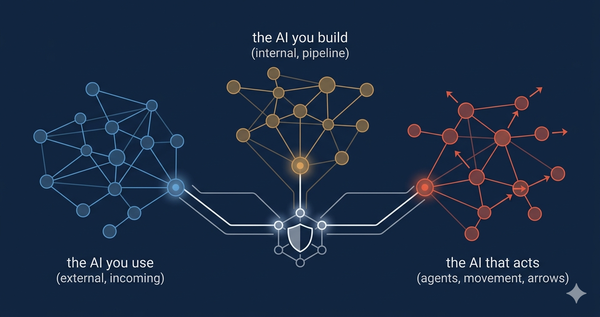
Key Takeaways * Zero trust AI security requires distinct approaches for AI systems that enterprises consume versus AI systems they develop internally * Traditional perimeter-based security measures fail to protect distributed AI workloads across multi-cloud environments and third-party services * Identity-centric controls for AI models, data pipelines, and inference
AI
Key Takeaways * Zero trust security model provides essential protection against unique AI threats, including adversarial attacks, data poisoning, and model theft that traditional security approaches cannot adequately address. * AI architectures with multiple models require granular access controls, continuous monitoring, and microsegmentation to secure data flows between components like training pipelines,
AI
AI is transforming the field of cybersecurity by improving how threats are detected and managed. This article delves into the benefits of AI and cybersecurity, the potential risks involved, and the strategies to effectively integrate AI models into defense mechanisms through behavioral analytics. Organizations can better protect themselves against evolving
AI
Generative AI can transform enterprises, but it comes with significant security risks. This article dives into the core issues of generative AI enterprise security, exploring common threats and offering best practices to protect your organization. Key Takeaways * Generative AI systems face unique security challenges, including risks of sensitive data exposure
AI
So we must understand one fancy term, "AI," which stands for artificial intelligence. If I say this is the hottest topic ever and has a large impact on the world and industries, I wouldn’t be exaggerating. AI is not only about chatbots these days. In 2025, it
SASE
The Future of Cybersecurity: AI-Powered SASE Imagine a sprawling metropolis with security guards on every block, monitoring every alleyway and building. But instead of just trusting their instincts, they have advanced surveillance systems—motion detectors, predictive crime analysis, and automated alarms that flag suspicious activity before a crime occurs.
AI
With the rapid growth in the digital world, cybersecurity has become a notable concern for personal and organizational needs. The sophistication level that cyber threats have reached now requires equally sophisticated defense mechanisms. One such revolutionary technology that may turn the tables in the field of cybersecurity is that of