
What AI Changes About Enterprise Network Design
AI agents change more than how much traffic crosses the network. They change how work moves between models, applications, data, and services, raising new questions for enterprise network planning.
AI agents change more than how much traffic crosses the network. They change how work moves between models, applications, data, and services, raising new questions for enterprise network planning.

AI agents need more than a job description. They need an owner, scoped authority, enforceable controls, and a defined way for that authority to end.

AI authority rarely arrives through one reckless decision. It accumulates through reasonable approvals until no one can say who authorized the workflow.

AI output is often close enough to look finished, but not close enough to trust. I’m working through how AI is forcing me to get clearer about standards, judgment, voice, and what good work actually looks like.

AI agents are not just helping individual contributors move faster. They are helping us build better review loops around the work before we pull real people in.

Why microsegmentation still matters in the AI era, and why the path forward has to be smaller, smarter, and more honest. If you have ever been part of a microsegmentation project, you know the hard part usually does not start with the technology. It starts in a room. Network teams

Every quarter, enterprises ask familiar questions about human access. Does this user still need access to this application? Does this admin still need elevated privileges? Is this service account still active? Are these permissions still aligned to the person’s role? What access should be revoked before it becomes a
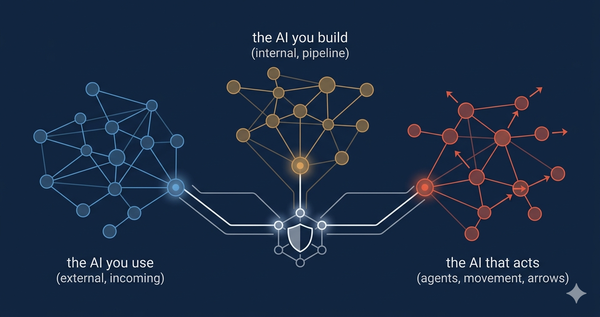
Something shifted at RSAC 2026 last week. The conversations that previously orbited around "how do we secure AI" moved toward something more specific and more urgent: how do we extend Zero Trust, the framework most enterprises have been building toward for the better part of a decade, to
OpenClaw became the most-starred repository in GitHub history in about 60 days. By early March, it had passed 250,000 stars, overtaking React, a project that took over a decade to reach that number. If you work in enterprise security or architecture and haven't heard of it
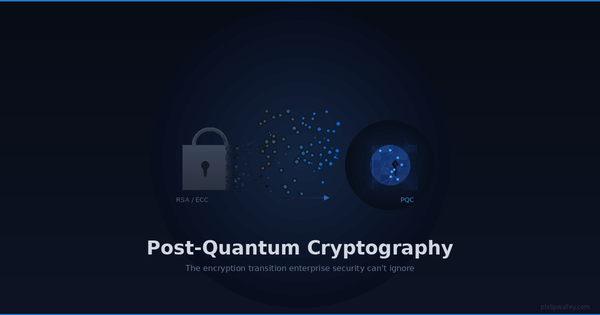
I keep hearing about post-quantum cryptography. It comes up in industry reports, vendor announcements, and security news with increasing frequency. My sense is that most security professionals are in the same place I am: aware that something is happening, not entirely sure what it means for them, and uncertain
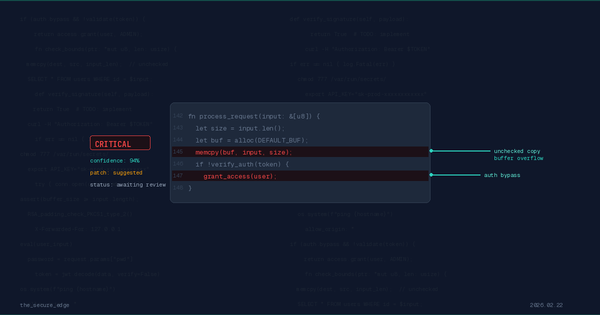
We've been talking about the cybersecurity workforce shortage for over a decade now. At this point, it's almost background noise in the industry. Someone publishes the ISC2 numbers, we all read the headlines, nod along, and go back to work. Millions of unfilled roles globally, the

It's been a minute since I posted here. I've been heads-down in the security trenches, but something has been eating at me that I need to get out in the open. Every week, I'm in conversations with enterprise architects, security leaders, and IT

AI
Key Takeaways * Combining data privacy protection with AI system safeguards enterprise AI implementations from unauthorized access and data breaches * Organizations implementing private AI must address unique challenges, including model isolation, data residency requirements, and secure inference pipelines * The NIST AI Risk Management Framework, ISO/IEC 27001, and emerging standards like
AI
Key Takeaways * Zero trust AI security requires distinct approaches for AI systems that enterprises consume versus AI systems they develop internally * Traditional perimeter-based security measures fail to protect distributed AI workloads across multi-cloud environments and third-party services * Identity-centric controls for AI models, data pipelines, and inference
AI
Key Takeaways * Zero trust security model provides essential protection against unique AI threats, including adversarial attacks, data poisoning, and model theft that traditional security approaches cannot adequately address. * AI architectures with multiple models require granular access controls, continuous monitoring, and microsegmentation to secure data flows between components like training pipelines,
SASE
I was recently made aware of this article coming out of DEF CON. I havent setup a link share spot yet so you get this instead DEF CON research takes aim at ZTNA, calls it a bust | Network World "The research team found complete authentication bypasses in all tested
SASE
As enterprises accelerate cloud adoption with 83% of workloads expected to run in the cloud by 2025, traditional perimeter-based security models are proving inadequate for protecting distributed, hybrid environments. The convergence of network and security services through a secure access service edge, combined with zero trust principles, offers a

AI
AI is transforming the field of cybersecurity by improving how threats are detected and managed. This article delves into the benefits of AI and cybersecurity, the potential risks involved, and the strategies to effectively integrate AI models into defense mechanisms through behavioral analytics. Organizations can better protect themselves against evolving

AI
Generative AI can transform enterprises, but it comes with significant security risks. This article dives into the core issues of generative AI enterprise security, exploring common threats and offering best practices to protect your organization. Key Takeaways * Generative AI systems face unique security challenges, including risks of sensitive data exposure

Zero Trust
Is the VPN dead? Traditional VPNs are increasingly seen as insufficient for today’s security needs. This article explores why VPNs are considered outdated and discusses modern, secure alternatives that provide secure, remote access for users working from various locations, ensuring they can safely access applications while maintaining optimal visibility

SASE
Searching ‘SASE vs Zero Trust’? You likely want to know the key differences and which is better for your organization. This article explains what SASE and Zero Trust are, their unique strengths, and how to choose between them. Key Takeaways * SASE (Secure Access Service Edge) integrates various security tools into

SASE
Want to keep your cloud data safe? Secure service solutions protect your sensitive information from cyber threats. Learn what secure service is, why you need it, and how to use it effectively. Verifying user identity is crucial in these solutions to ensure only authorized access to applications and data. Key

Network
The Benefits of Global Connectivity in Today’s World Global connectivity links the world through the Internet, satellites, and mobile networks. It boosts economies, enhances communication, and improves access to services like healthcare and education. This article will explain how it works, its benefits, the key technologies involved, and what

Zero Trust
Zero Trust Security is a cybersecurity concept that means not trusting any entity by default, whether inside or outside your network. It requires every access attempt to be continuously verified. This article explores what Zero Trust Security is, why it’s essential, and the steps to implement it effectively in